
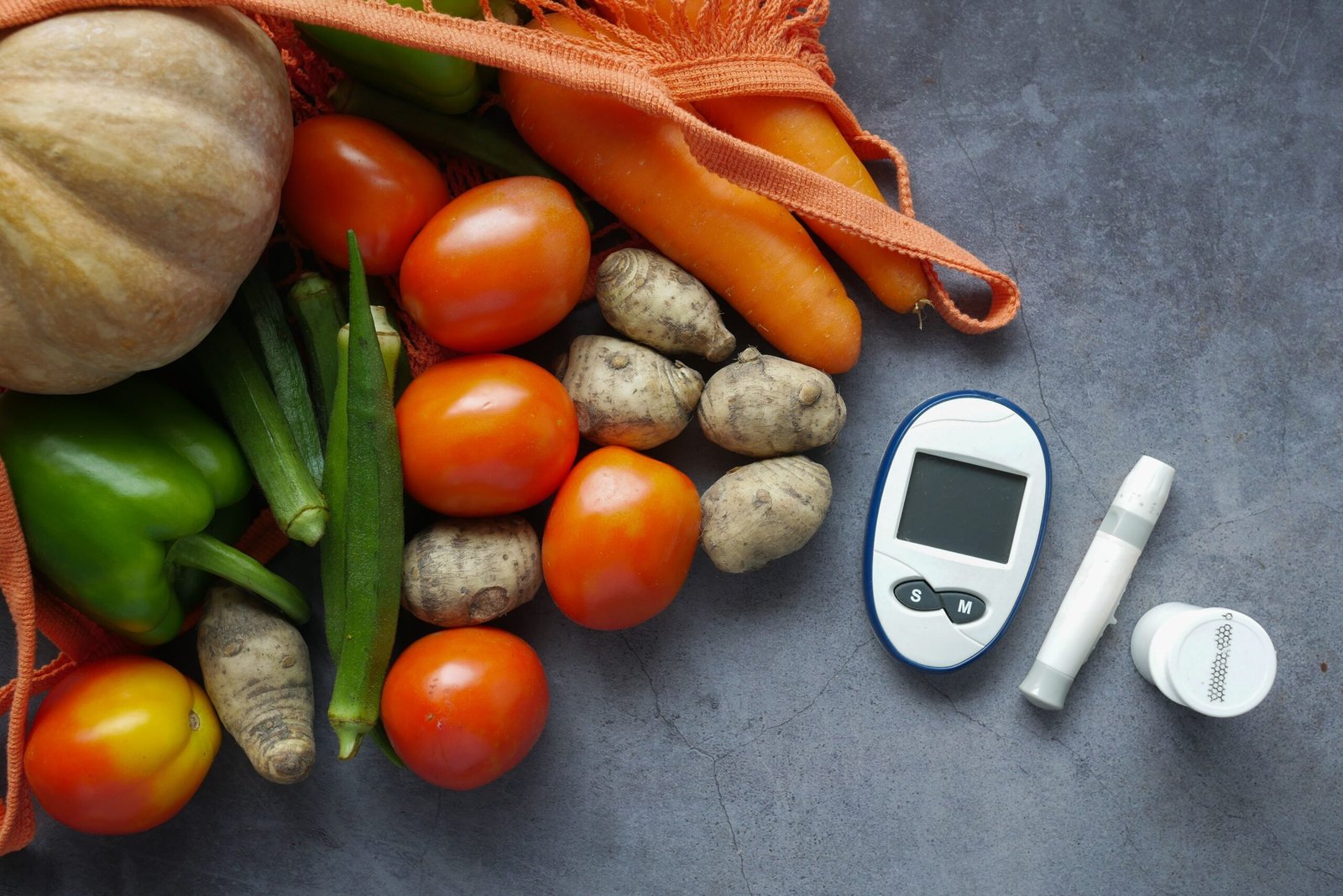
If you have ever seen a food labeled “low GI” or heard that you should avoid white rice because it “spikes your blood sugar,” you have run into the glycemic index. It is one of the most talked about ideas in nutrition and one of the most misunderstood.
The short version is this. The glycemic index (GI) ranks carbohydrate foods by how quickly they raise blood glucose. It can be a useful rough guide for choosing carbohydrates, especially if you are managing diabetes. But for most people, it is not a number to memorize or a rule to build every meal around. Fiber, portion size, and the overall quality of your diet tell you more. This article explains how GI works, why the numbers are less fixed than they look, what research says, and how to use the idea sensibly without turning meals into math.
What the Glycemic Index Actually Measures
The glycemic index ranks foods on a scale of 0 to 100 according to how high blood glucose rises within two hours of eating them. Pure glucose sits at the top with a value of 100, and everything else is compared against it. Foods with a higher GI cause higher blood glucose peaks than foods with a lower GI. glycemic load and glycemic index +2
The cutoffs you will see most often are:
- Low GI: 55 or less
- Medium GI: 56 to 69
- High GI: 70 or more
Foods commonly rated low include most fruits and vegetables, beans, minimally processed grains, pasta, low-fat dairy, and nuts. High-GI examples include white bread, most crackers, bagels, cakes, doughnuts, and most packaged breakfast cereals. Substack
Behind the scenes, GI is measured by feeding volunteers a portion of food that contains a fixed amount of carbohydrate, then tracking their blood glucose. That fixed amount is the first source of trouble, and it leads to a second number worth knowing.
Glycemic Load: Where Portion Size Comes In
GI tests use portions containing 50 grams of carbohydrate, which is not always what a person actually eats. Fifty grams of carbohydrate from pasta is a bit more than one cooked cup, a normal serving. The same amount from baby carrots would take a 7-cup portion. A food can have a high GI and still affect your blood sugar very little at the size you would realistically eat. Illinois
Glycemic load (GL) fixes this by accounting for portion size. The formula is GI multiplied by the grams of carbohydrate in your serving, divided by 100. A GL of 10 or less is low, 11 to 19 is medium, and 20 or more is high. illinoisillinois
Here are two worked examples. An apple with 25 grams of carbohydrate and a GI of 30 has a GL of 7.5, which is low. Watermelon has a high GI, but a typical serving has few carbohydrates, so its glycemic load is low. For a hypothetical comparison, a food with a GI of 70 and 30 grams of carbohydrate per serving has a GL of 21, which counts as high. Same GI category as the watermelon, very different effect. Substack Wikipedia
For everyday purposes, GL is usually the more practical idea. If you remember one thing from this section, remember that the amount you eat matters as much as the food itself.
Why a Food’s GI Is Not a Fixed Number
Food lists make GI look like a permanent property, like calories per slice. In reality, it shifts with several factors.
Processing and cooking. Ripeness and storage time raise GI, since riper fruit and vegetables have a higher value. Processing tends to raise it as well, and cooking time changes it. One example from a nutrition article is pasta: al dente pasta has a lower GI than fully cooked pasta. staywellsoptionsonlinevinmec
Fiber and fat. Fat and fiber in a food can lower its GI. staywellsoptionsonline
What else is on the plate? Most people do not eat single foods in isolation. Combining carbohydrate foods with different GIs changes the overall GI of a meal, and adding protein and cooking fat alters it too. The number printed on a list for a plain baked potato says little about a potato eaten with olive oil, beans, and a salad. health exchange
The person eating it. Individual variation is real. Researchers at Tufts University tested white bread repeatedly and found a relatively high level of variability both between different people and within the same person on different occasions. Your glycemic response to oatmeal on a Tuesday may not match your neighbor’s or even your own the following week. Newswise
A fair counterpoint exists. An older study of people with diabetes found that when the GI difference between two meals was large enough, GI ranked their glycemic responses correctly in 36 of 37 cases. The size of that difference needed to be sizable, though. For people with type 2 diabetes, a GI gap of about 34 points was needed for 95 percent confidence in the ranking. In other words, GI is a blunt tool. It works for big contrasts, such as a sugary cereal versus steel-cut oats, and is shaky for fine distinctions between similar foods. nihni
What the Research Says About Health
The evidence is genuinely mixed, which is why you will find confident claims on both sides.
On the supportive side, a large analysis published in the American Journal of Clinical Nutrition followed more than 200,000 people across three US cohorts. Those in the highest group for dietary GI had a 33 percent higher risk of developing type 2 diabetes than those in the lowest group. That is observational research, which cannot prove GI itself was the cause. People who eat high-GI diets often differ in other ways, such as fiber intake and overall diet quality. nih
For people who already have diabetes, guidance is cautious. The American Diabetes Association’s 2014 nutrition recommendations, an older document that I could access in full, said that substituting low-glycemic-load foods for higher-glycemic-load foods may modestly improve glycemic control and that monitoring total carbohydrate intake remains a key strategy. A more recent clinical review notes that European diabetes nutrition guidelines recommend low-GI or low-GL diets with moderate certainty of evidence. Note the words “modest” and “moderate.” Neither suggests GI is a magic lever. guidelinecentralnih
For weight management and general health in people without diabetes, the picture is weaker. A published discussion of GI and GL outlines the limitations of the measure and describes the evidence for many health outcomes as weak. Another overview adds that more studies are needed to determine how a low-GI approach affects long-term weight management. cereals and grains healthline
The honest reading is that GI has real physiological meaning, but its ability to predict long-term health is modest and inconsistent.
Where GI Can Mislead You
A low number does not mean a food is nutritious. Fat lowers GI, so chocolate has a lower GI than many healthier foods, yet it is calorie-dense. Relying on GI alone can leave a diet high in fat and calories and unbalanced. Ice cream, for instance, often scores low for similar reasons. health exchange
The reverse is also true. Many nutritious foods have a higher GI than foods with little nutritional value. Some fruits, root vegetables, and whole grain products land in the medium or high range while offering fiber, vitamins, and minerals. Avoiding them because of a GI chart would be a loss. medicine net
GI also says nothing about how much you eat. It is total calorie intake that leads to weight gain and increased insulin resistance, and GI does not account for total macronutrient intake. A large serving of a low-GI food can still raise blood sugar substantially, and it can still add up in calories. health exchange
How to Use GI in Everyday Eating
You do not need to look up every food. A few habits capture most of what is useful in the concept.
- Favor whole, minimally processed carbohydrates. Oats, beans, lentils, intact whole grains, fruit, and vegetables tend to land lower on the scale and bring fiber along with them.
- Treat refined, sugary foods as occasional. White bread, sweet cereals, pastries, and crackers are the classic high-GI group. You can still eat them. They just work better in smaller portions or alongside other foods.
- Build balanced meals. Pairing carbohydrates with protein, fat, and fiber changes how a meal behaves, as discussed above. A bagel alone and a bagel with eggs and avocado are not the same experience.
- Do not overcook starches. If you like pasta, cooking it until just tender keeps its GI lower than cooking it soft.
- Pay attention to portions. This is the practical heart of glycemic load. A smaller portion of a higher-GI food lowers its impact.
- Use fruit freely. Most whole fruit sits comfortably in the low-GL range once you account for portion size.
A simple breakfast illustrates the idea. Steel-cut oats with berries and nuts is a lower-GI choice than a bowl of sweetened flakes, and it likely keeps you full longer too. Nothing about that requires a chart.
Who Should Pay Closer Attention
GI becomes more relevant in a few situations.
People with diabetes or prediabetes. If you monitor your blood glucose, GI can be one tool among several, alongside carbohydrate counting, portion control, medication timing, and physical activity. Because individual responses vary so much, checking how your own glucose responds to specific meals often tells you more than any table. A registered dietitian or diabetes educator can help you set this up.
People with gestational diabetes. Dietary advice during pregnancy is individualized, so it is best to follow your care team’s guidance.
People curious about their own responses. If you use a continuous glucose monitor, you will probably see that foods behave differently for you than a list predicts. That is normal. Remember that a glucose bump after eating is a normal physiological response, not a sign that something went wrong.
If you have none of these concerns, treating GI as background knowledge is perfectly reasonable.
The Bottom Line
The glycemic index is a real and sometimes useful measure of how quickly carbohydrates raise blood sugar. Glycemic load improves on it by factoring in portion size. Both are imperfect: values shift with ripeness, cooking, and meal composition, vary from person to person, and predict long-term health only modestly.
For most people, the practical takeaway is simpler than any chart. Eat more minimally processed, fiber-rich carbohydrates, keep refined sugary foods in moderation, build balanced plates, and watch portions. If you live with diabetes, GI may deserve a place in your toolkit, ideally with professional support. Otherwise, you can let it sit in the background and spend your attention on the bigger picture of how you eat.