
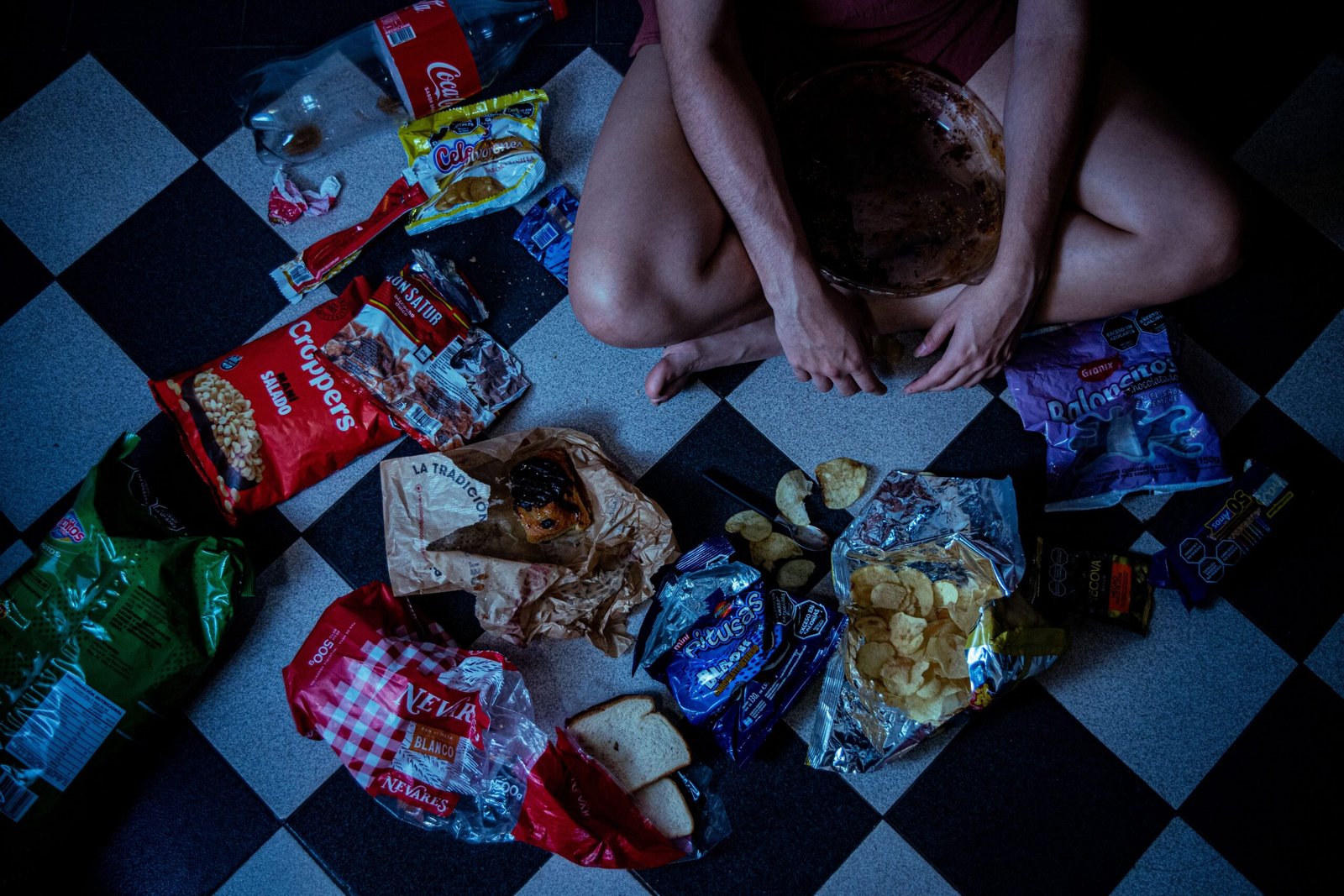
Late-night snacking tends to get treated as a simple lack of discipline, something you should just be able to stop doing if you really wanted to. But if you’ve ever found yourself standing in front of the open fridge at ten at night, not even sure what you’re looking for, you already know it’s rarely that simple. Late-night snacking usually has real underlying causes, and understanding those causes tends to be far more effective than just trying to white-knuckle your way through willpower alone.
This post will walk through the most common reasons people snack at night and practical, realistic ways to address each one.
Why Late Night Snacking Happens in the First Place
Before jumping into fixes, it helps to understand that late-night snacking isn’t one single behavior with one single cause. It’s usually the result of one or more overlapping factors: not eating enough earlier in the day, emotional or stress-driven eating, habit and environment, boredom, poor sleep, or genuine late evening hunger due to how meals were spaced out. Identifying which of these is actually driving your own pattern makes a much bigger difference than applying a generic fix that doesn’t address the real cause.
Cause One: Under-eating Earlier in the Day
One of the most common and most overlooked causes of late-night snacking is simply not eating enough during the day. If breakfast is small or skipped, lunch is rushed, and dinner is smaller than what your body actually needs, your body doesn’t just forget about that energy deficit. It tends to catch up on it later, often in the form of intense hunger and cravings in the evening, when your guard is lower and there’s less structure around meals.
This pattern is especially common among people trying to restrict calories during the day in an attempt to “save room” for later, or those who are simply too busy to eat properly until they finally slow down in the evening. The irony is that this approach often backfires, since arriving at nighttime significantly underfed tends to lead to eating more overall, not less, compared to eating adequately spaced meals throughout the day.
Practical fix: Make sure your meals throughout the day, particularly breakfast and lunch, include enough protein and fiber to actually keep you satisfied, rather than being rushed or under-portioned. If you notice you’re ravenous by evening, that’s usually a sign your earlier meals weren’t providing enough, not a sign of poor evening discipline.
Cause Two: Emotional or Stress-Driven Eating
Evenings are often the first quiet, unstructured time in someone’s day, after work, after other responsibilities, after the busy parts of the day have wound down. This makes it a common time for stress, boredom, loneliness, or other emotions to surface, and food can become a way of managing those feelings, whether or not someone’s consciously aware that’s what’s happening.
This isn’t a character flaw, and it’s an extremely common pattern. Food is genuinely comforting, and using it occasionally to cope with a hard day isn’t something to feel intense guilt over. The issue arises when it becomes the primary or only strategy for managing difficult emotions, since food doesn’t actually resolve the underlying stress or feeling; it just temporarily distracts from it.
Practical fix: Building a small number of alternative coping tools for evening stress, like a short walk, a call with a friend, journaling, or a relaxing non-food activity, gives you other options when emotional eating urges show up. This doesn’t mean never eating for comfort again; it means having more than one tool available so food isn’t the only option every single time.
Cause Three: Habit and Environment
Sometimes late-night snacking isn’t really about hunger or emotion at all; it’s simply become an automatic habit tied to a specific routine, like snacking in front of the television every night regardless of actual hunger. Environmental cues, the couch, the TV turning on, and a specific time of night can trigger a snacking urge simply through repeated association, similar to how certain locations or routines trigger other automatic habits.
Practical fix: Changing small elements of the environment can interrupt an automatic habit loop. This might mean not keeping trigger foods easily visible or accessible in the kitchen, doing a different activity during the time you’d normally snack, or simply pausing to ask whether you’re actually hungry before eating on autopilot. Small environmental changes are often more effective than trying to rely purely on willpower to override an ingrained habit.
Cause Four: Boredom
Boredom eating is closely related to habit, but it’s driven more by a lack of stimulation than an ingrained routine specifically. Evenings, especially quiet ones without much planned, can create a mental itch that eating temporarily satisfies, even though the actual issue isn’t hunger; it’s simply having nothing else to do.
Practical fix: Having a short list of engaging alternative activities ready, a book, a hobby, or a show you’re genuinely interested in rather than passively half-watching can help fill that gap without relying on food. It also helps to notice the difference between genuine hunger and the restless, low-grade urge that boredom tends to create, since they often feel different once you pay closer attention.
Cause Five: Poor Sleep and Late Nights
The later you’re awake, the more opportunity there is for snacking urges to arise, particularly since staying up later often overlaps with several of the causes already mentioned: boredom, habit, and reduced willpower due to fatigue. Additionally, poor sleep itself affects hunger hormones directly, increasing ghrelin, the hormone that stimulates hunger, and decreasing leptin, the hormone that signals fullness. This means that a night of poor sleep can directly increase cravings and hunger the following evening, creating a cycle that’s hard to break without addressing the sleep piece specifically.
Practical fix: Working toward a more consistent sleep schedule can reduce the frequency and intensity of late-night hunger over time. This isn’t an instant fix, but improving sleep consistency tends to have a meaningful, compounding effect on late-night eating patterns that’s easy to overlook if you’re only focused on nighttime behavior itself.
Cause Six: Genuine Hunger Due to Meal Timing
Sometimes late-night snacking is simply the result of dinner being too early relative to bedtime, leaving a long stretch of time where genuine hunger naturally builds back up. If dinner happens at six and bedtime isn’t until eleven or later, feeling hungry again by nine or ten isn’t a discipline issue; it’s a normal response to a long gap between eating.
Practical fix: If this pattern sounds familiar, it can help to either shift dinner slightly later or plan for a small, intentional evening snack built around protein and fiber, rather than treating any evening eating as something to avoid entirely. A planned, balanced snack is very different from unplanned, habitual snacking on whatever’s easiest to grab.
Not All Snacking Needs to Be “Fixed”
It’s worth pointing out clearly that snacking at night isn’t inherently a problem. If you’re eating a reasonable, planned snack because you’re genuinely hungry due to meal timing, there’s nothing wrong with that. The goal here isn’t to eliminate all evening eating; it’s to understand what’s actually driving snacking that feels automatic, excessive, or disconnected from real hunger, so you can address the root cause rather than just trying to suppress the behavior itself.
Trying to eliminate all evening eating through sheer restriction often backfires, leading to the kind of under-eating during the day covered in the first cause, which then increases the very late-night hunger you were trying to avoid in the first place. The goal is understanding and addressing the actual driver, not blanket restriction.
Building a Personalized Approach
Since late-night snacking can stem from several different causes, sometimes more than one at the same time, the most effective approach usually starts with a bit of honest observation rather than jumping straight to a fix. For a few days, simply noticing when snacking urges show up and what seems to be driving them—actual hunger, stress, boredom, habit, poor sleep the night before—can reveal patterns that make the right fix much more obvious.
Someone whose late-night snacking is driven primarily by under-eating during the day needs a very different solution than someone whose snacking is driven by nightly boredom or unmanaged stress. Applying a fix that doesn’t match the actual cause tends to be frustrating and ineffective, which is often why generic advice like “just don’t keep snacks in the house” works for some people and does nothing for others.
The Bottom Line
Late-night snacking is rarely just a matter of insufficient willpower. It’s usually driven by one or more real, identifiable causes: not eating enough earlier in the day, emotional or stress-driven eating, ingrained habits and environmental cues, boredom, poor sleep, or genuine hunger due to meal timing. Each of these has a different, more effective fix than simply trying to force yourself to stop through discipline alone.
Taking a bit of time to notice what’s actually driving your own pattern, rather than assuming it’s a personal failing, makes it much easier to find an approach that actually works. And it’s worth remembering that not all evening eating needs to be eliminated in the first place. The goal is understanding your pattern well enough to respond to it intentionally, rather than either restricting it away entirely or letting it run on autopilot every single night.





Leave a Reply