
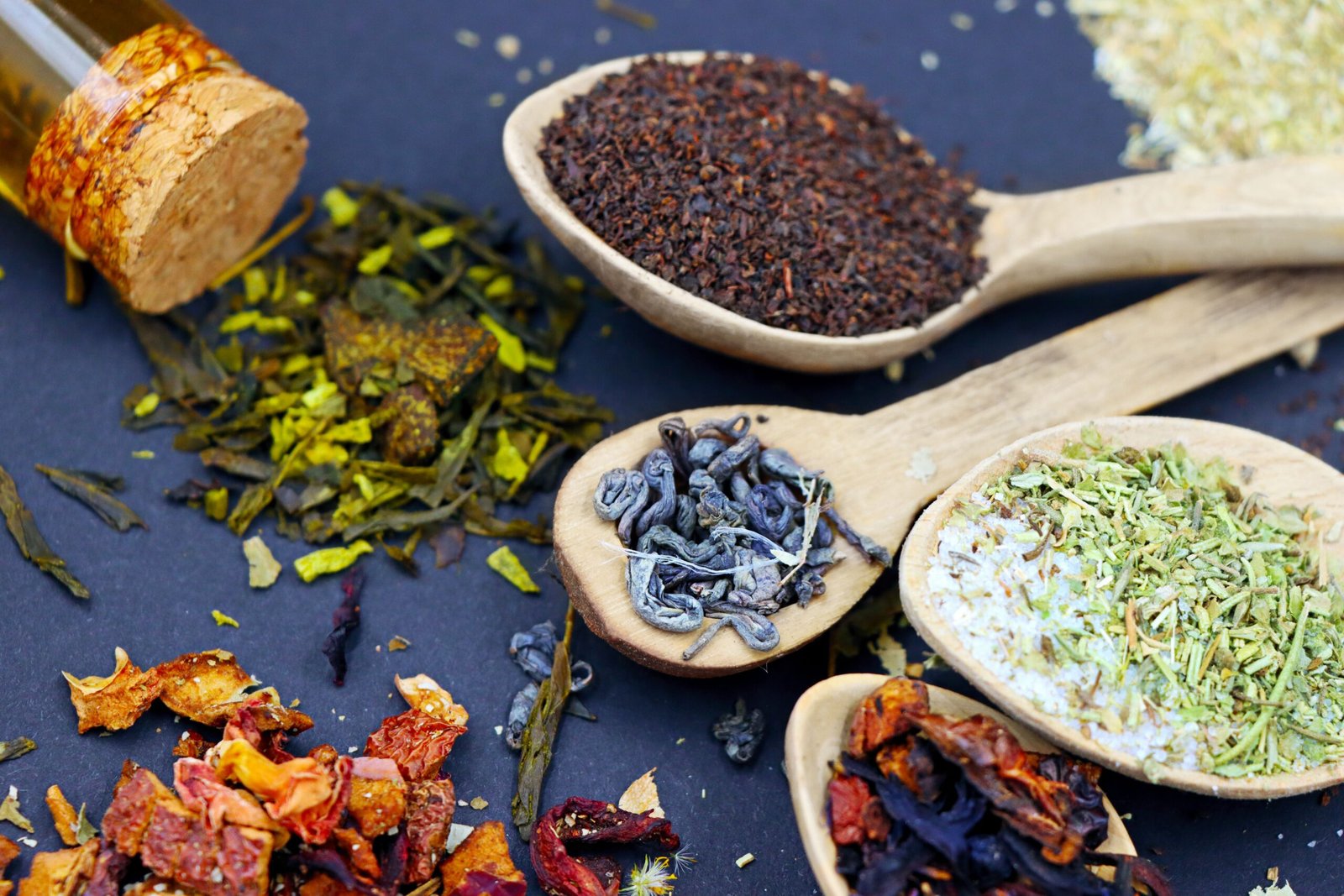
Walk down the tea aisle and you will find hundreds of boxes, but nearly all of them fall into three groups: green tea, black tea, and herbal tea. They look similar in a mug, yet they are not interchangeable. Two of the three come from the same plant. One is not tea at all, in the strict sense. They differ in caffeine, in the plant compounds they deliver, and in who should be cautious with them.
The short answer: green and black tea are made from the same leaf and offer broadly similar benefits, with caffeine that depends more on how you brew than on the color. Herbal tea is usually caffeine-free and gets its character from whatever plant is in the bag. None of the three is a medicine, and the best one for you is largely the one you enjoy and tolerate well. This guide explains the differences, what the evidence actually supports, and the situations where a little caution makes sense.
Where They Come From
All varieties of true tea are made from the leaves of the Camellia sinensis plant, so the differences between types come mainly from how the leaves are processed after picking. teasource
The key step is oxidation. Oxidation is a chemical reaction that happens when the inside of the leaf is exposed to oxygen, and it produces tea’s brown color and distinctive taste. It is the same process that browns a cut apple.
- Green tea: Leaves destined to become green tea do not undergo oxidation, so they keep their green color and light, fresh flavor. uw
- Black tea: Black tea is highly oxidized. That gives it a darker color and stronger, maltier taste. teachable
- Oolong: partially oxidized, so it sits between the two.
Herbal tea is a different thing altogether. It is packaged and brewed like other teas, but it does not come from the Camellia sinensis plant. It is made from herbs, fruits, flowers, or other botanicals. Chamomile, peppermint, hibiscus, rooibos, and ginger are common examples. The technical name for these drinks is “tisanes.” Kitchenaid
| Green tea | Black tea | Herbal tea | |
|---|---|---|---|
| Plant | Camellia sinensis | Camellia sinensis | Many different plants |
| Processing | Unoxidized | Fully oxidized | Dried herbs, flowers, fruit |
| Typical caffeine per 8 oz | about 29 mg | about 48 mg | usually none |
| Flavor | Fresh, grassy, delicate | Bold, malty | Varies widely |
| Key plant compounds | Catechins | Theaflavins and others | Depends on the herb |
Caffeine: Less Straightforward Than It Looks
Many people assume green tea has far less caffeine than black. On average, that holds. An 8-ounce cup of coffee contains about 95 milligrams of caffeine, black tea about 48, green tea about 29, and oolong about 38. Tea generally delivers roughly half the caffeine of coffee or less. eat right
But those are averages, and your cup can differ a lot. One of the biggest misconceptions about tea is that green tea necessarily contains less caffeine than black tea, because brewing matters. If green tea is steeped the same way as black tea, you can get as much or more caffeine in your cup. Three things drive the number: whittardteasource
- Steeping time. Generally speaking, the shorter the brew, the less caffeine. Whittard
- Amount of leaf. More tea means more caffeine, so a 24-ounce iced tea can contain more than an 8-ounce cup of green tea.
- Water temperature. Black tea is typically steeped longest at the highest temperature, which extracts more caffeine. Flavia
Herbal teas sidestep all this. Herbal teas such as chamomile, hibiscus, and peppermint are naturally caffeine-free. One exception is yerba mate, which contains about half the caffeine of a similar cup of coffee. Rooibos is also naturally caffeine-free. If you are sensitive to caffeine or want something to drink in the evening, herbal teas are the straightforward choice. Always check the label, since some blends mix in real tea. teachable
Antioxidants and Health: What the Evidence Really Shows
True teas are rich in polyphenols, plant compounds with antioxidant properties. The two types carry different ones. The main polyphenols in green tea are catechins, and when tea leaves are fermented into black tea, the catechins convert to theaflavins, another form of antioxidant. A Harvard Heart Letter noted that green tea has slightly higher flavonoid levels than black tea. NBC News Harvard
Large population studies have linked tea drinking with better health. Several large studies show that people who regularly drink black or green tea may be less likely to have heart attacks and strokes. A study of nearly 500,000 people in the UK reported that two cups of black tea a day was associated with a 9 to 13 percent lower risk of early death compared with non-tea drinkers. A recent study covered in October 2026 found that black tea showed more consistent associations with lower cardiovascular risk, though green tea also showed benefits, and moderate-strength tea was linked with lower risk. Drinking tea may benefit the heart and blood vessels, according to the July 2015 Harvard Heart Letter +2.
Here is the important caveat. These are observational studies, so they cannot prove tea is the cause. People who drink tea tend to differ from those who do not, so researchers cannot be certain whether it is the tea or something else that lowers risk. A scientific review concluded that observational data suggest a benefit, but results are mixed and likely confounded by lifestyle and diet, and it remains uncertain whether tea should be recommended to the general population as a way to reduce cardiovascular risk. A 2026 review made a similar point about choosing between types: current evidence does not support disease-specific tea selection or a standardized therapeutic dose. Drinking tea may benefit the heart and blood vessels, from July 2015. Harvard Heart Letter +2
The most reasonable reading is that unsweetened green or black tea is a healthy habit with possible modest benefits, and that neither clearly beats the other. A heart specialist quoted by CNN even said he would not advise someone who enjoys green tea to switch to black tea or vice versa. Harvard’s advice was in the same spirit: drink tea if you enjoy it, in moderation, and not because you are taking it as a medicine. Sugar works against you, too. Adding a little sugar is fine, but several heaping teaspoons probably cancel out tea’s possible benefits. How you drink your tea could determine whether you gain or lose heart health benefits (+2).
Herbal teas are harder to generalize about, because each is a different plant with its own compounds. Evidence for specific claims, such as chamomile for sleep or ginger for nausea, varies by herb and is often thinner than the marketing suggests. Enjoy them for flavor and hydration, and treat health promises on the box with some skepticism.
What to Watch For
Tea is safe for most people, but each type has a few caveats.
Iron absorption. Tea contains tannins. Tannins can bind to iron in certain foods and reduce how much you absorb, and they are more likely to affect iron from plant sources than from animal foods. There is no consistent evidence linking tea consumption with iron deficiency anemia in the general population, but if you have low iron, are pregnant, or eat mostly plant-based foods, it helps to leave an hour or so between tea and meals. Tea with lemon or vitamin C-rich foods is another option. healthlinecamellia-sinensis
Sleep and reflux. The caffeine in tea can aggravate heartburn or acid reflux in some people. If you are sensitive, keep black tea to the morning and move to herbal later in the day. Peppermint deserves its own mention. It can relax the esophageal sphincter, which sometimes makes reflux worse. healthlinehappiestbaby
Green tea extract is not green tea. Concentrated supplements behave differently from a brewed cup. The European Food Safety Authority concluded that catechins from green tea infusions prepared in a traditional way are generally considered safe, though rare cases of liver injury have been reported, and that doses over 800 mg of EGCG a day increased liver enzymes that signal injury. A hepatologist quoted by NutraIngredients said drinking several cups of regular green tea daily is fine, while high-dose extracts in weight-loss and bodybuilding products are the concern. If you take a supplement, consider discussing it with your doctor. Statement on the Hepatotoxicity of Green Tea Catechins: Lay Summary +2
Herbal teas and pregnancy or medication. Because research on the safety of herbal teas is limited, a lack of evidence of harm should not be treated as proof that a tea is safe. Herbal teas containing black cohosh or licorice may induce labor prematurely and should be avoided in pregnancy. Certain herbal teas may also contain compounds that interact with medications. If you are pregnant, nursing, or taking prescription medicine, check specific herbs with your pharmacist or clinician. Is tea safe during pregnancy? +2
Temperature. Very hot drinks are worth cooling first. Research reviewed by the International Agency for Research on Cancer has linked habitual consumption of very hot beverages (above about 65 degrees Celsius) with esophageal cancer risk. Letting your tea cool until you can sip it comfortably also prevents burns.
How to Choose
- You want something calming in the evening: herbal tea, such as chamomile, rooibos, or ginger.
- You want a gentle lift: green tea, brewed briefly.
- You want a stronger morning cup or like adding milk: black tea.
- You are sensitive to caffeine: herbal tea or decaffeinated versions of green and black tea.
- You have low iron: tea between meals or herbal varieties.
- You are pregnant: talk to your care provider, then keep caffeine moderate and avoid unsafe herbs.
Brewing Tips
Brewing changes both flavor and caffeine. One brewing guide recommends herbal tea for 3 to 4 minutes in boiling water (212°F) and oolong for 2 to 3 minutes at 195°F. For green tea, shorter steeping in cooler water gives slightly lower caffeine. If green tea tastes bitter, the water is probably too hot or the steep is too long. Black tea tolerates boiling water and a few minutes of steeping. kitchen maid Flavia
The Bottom Line
Green and black tea come from the same plant and differ mainly in how the leaves are processed. Both contain caffeine and polyphenols, and both are associated with good health in large studies, though evidence of cause is limited. Herbal tea is a separate category: usually caffeine-free, with benefits and cautions that depend on the plant. Drink what you like, keep it mostly unsweetened, watch the timing if you are sensitive to caffeine or have low iron, and be careful with concentrated extracts and with herbs during pregnancy or when taking medication.