
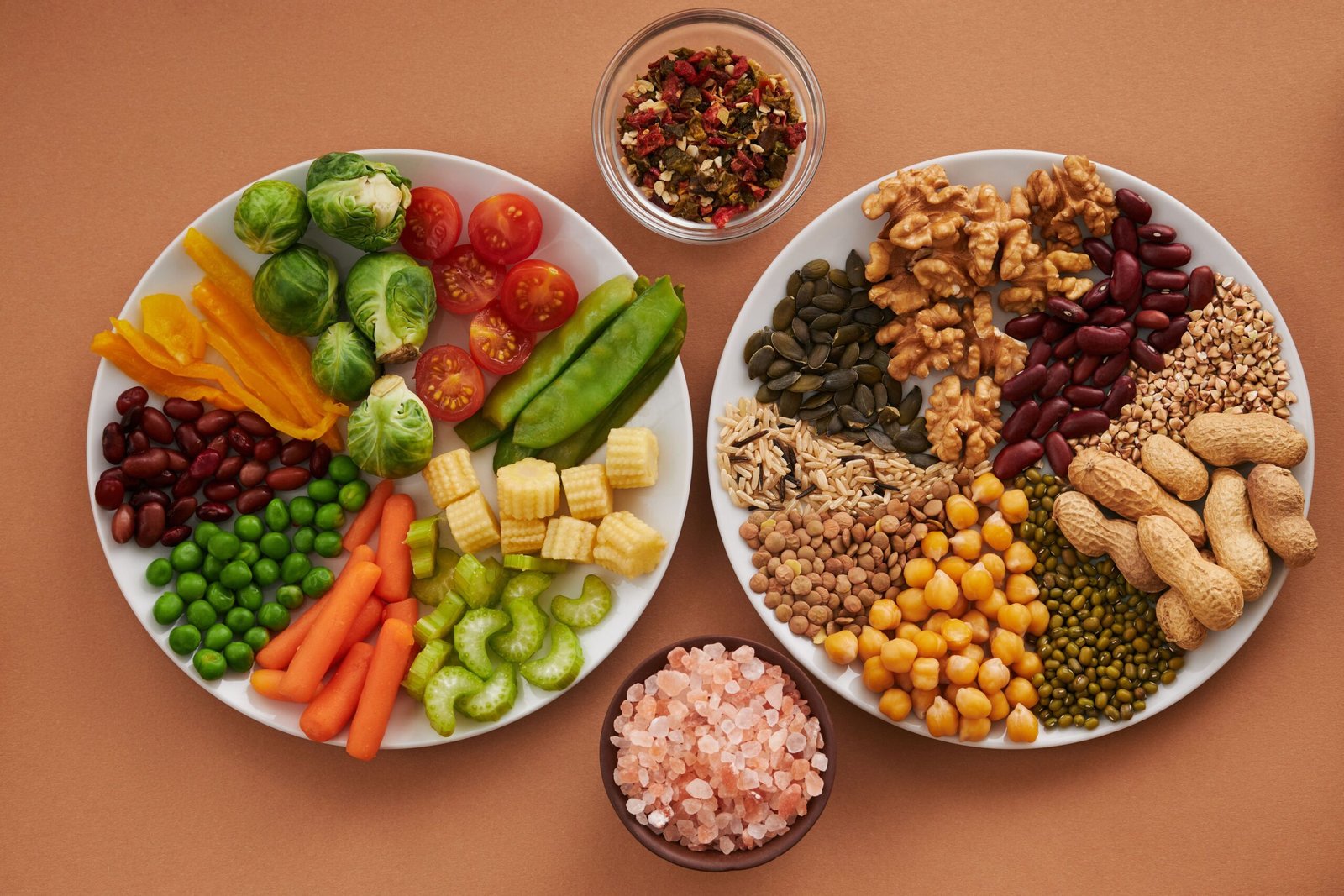
Every meal you eat is built from three large ingredients: protein, carbohydrate and fat. These are the macronutrients, and apart from alcohol they are the only nutrients that supply meaningful energy. Each one also does work the others cannot.
Here is the short answer. Protein supplies the amino acids your body uses to build and repair tissue. Carbohydrate supplies glucose, the fuel your brain and red blood cells rely on. Fat provides dense energy, forms cell membranes and carries fat-soluble vitamins. For healthy adults, the National Academies of Sciences, Engineering, and Medicine recommend getting 10 to 35 percent of calories from protein, 45 to 65 percent from carbohydrate and 20 to 35 percent from fat.
Those ranges are wide on purpose. Where you land inside them depends on your age, activity level, health and goals, and official advice on protein in particular has become contested. This guide explains what each macronutrient does, what the evidence says about how much you need, and how to turn percentages into grams you can actually use.
What Are Macronutrients?
“Macro” means large. You need these nutrients in gram quantities every day, while micronutrients such as vitamins and minerals are measured in milligrams or micrograms. Micronutrients matter just as much, but they provide no calories.
The three macronutrients are chemically different. Protein is built from amino acids and contains nitrogen. Carbohydrates are sugars, starches and fibers. Fats, also called lipids, include triglycerides, fatty acids and cholesterol. Almost no food is purely one of them. Chicken breast is mostly protein and olive oil is nearly pure fat, but lentils, eggs and milk each deliver a mix of two or three.
How Macronutrients Become Calories
The standard shortcut comes from the nineteenth-century chemist Wilbur Atwater: about 4 kilocalories per gram for carbohydrate and protein, 9 for fat and 7 for alcohol.
Those figures are averages, not constants. The USDA uses food-specific Atwater factors, and the energy in a gram of fat can range from about 8.4 to 9.4 kilocalories depending on the food. Fiber shows the limits of the shortcut. It counts as a carbohydrate, but you cannot digest it, and gut bacteria ferment only part of it into compounds worth roughly 2 kilocalories per gram.
The practical lesson is that fat carries more than twice the energy of protein or carbohydrate in the same weight, which is why small amounts of oil, butter or nuts add up quickly over a day.
Protein: Building and Repairing the Body
What Protein Does
Proteins are long chains of amino acids. Your body assembles them into muscle, enzymes, many hormones, antibodies, transport molecules and connective tissue. Nine of the amino acids are considered indispensable, meaning you cannot make them and must get them from food.
Your tissues are in constant turnover. Proteins are broken down and rebuilt around the clock, and eating protein gives muscle protein synthesis a temporary lift that lasts roughly three to four hours. During digestion, protein is split into amino acids and small peptides that enter the blood. Cells use what they need to make new protein, and the body breaks down any excess, excreting the nitrogen and using the remaining carbon for energy or converting it to glucose or fat.
How Much Protein Do You Need?
This is where current advice splits. The adult Recommended Dietary Allowance is 0.8 grams per kilogram of body weight per day, a level meant to cover the needs of nearly all healthy adults, and it has been essentially unchanged for more than 70 years. For a 70 kilogram adult, that is 56 grams.
On January 7, 2026, the 2025-2030 Dietary Guidelines for Americans raised the goal to 1.2 to 1.6 grams per kilogram per day. For the same adult, that is 84 to 112 grams. Researchers who favor higher intakes argue that the RDA is built to prevent deficiency rather than optimize health, and that many adults, especially older ones, may benefit from more.
Critics are not convinced. A perspective in The Journal of Nutrition argues that evidence from weight-loss studies is too narrow to support one target for everyone across the lifespan, and that the guidelines give limited attention to links between protein and chronic conditions such as kidney disease. Others note that most Americans already meet or exceed the older recommendation.
Taken together, 0.8 grams per kilogram works best as a floor for healthy adults. The case for going higher is strongest for older adults, people who lift weights and people losing weight. If you have kidney disease, ask your clinician before raising protein.
Protein Quality
Not all protein is equal. Scoring systems such as DIAAS and PDCAAS rate protein by its amino acid content and how well it is digested. Eggs, dairy, fish, poultry and meat supply all the essential amino acids in useful proportions, and so does soy. Most other plant proteins run low in one or two amino acids, which is easy to offset by eating a mix of beans, lentils, grains, nuts and seeds across the day. The 2025-2030 guidelines themselves call for a variety of animal and plant sources.
Carbohydrates: Fuel, Fiber and Fine Print
How the Body Uses Carbohydrate
Digestion breaks sugars and starches down to glucose, the main energy source for the brain, central nervous system and red blood cells. Glucose that is not used right away can be stored as glycogen in the liver and muscles or, like any surplus calories, converted to body fat. Liver glycogen helps keep blood sugar steady between meals, while muscle glycogen fuels the muscle that holds it.
The reference intake is 130 grams a day for adults and children, set to cover what the brain needs. Intake well below that level tends to push the body toward ketosis, the state that ketogenic diets aim for deliberately.
Sugar, Starch and Fiber
The 45 to 65 percent range hides big differences in quality. Starches and sugars in whole grains, beans, fruit and vegetables arrive with fiber and micronutrients. Soda, cakes and candy deliver sugar with little else. The 2025-2030 guidelines stress limiting highly processed foods, refined carbohydrates and added sugars.
Fiber deserves special attention. It is the nondigestible part of carbohydrate, and the Adequate Intake is 14 grams per 1,000 calories, about 25 grams a day for women and 38 for men. That target was set using data linking fiber to a lower risk of coronary heart disease. Typical intake in the United States is closer to 12 to 18 grams. Beans, lentils, whole grains, vegetables and fruit are the easiest ways to close the gap.
How Much Carbohydrate?
On a 2,000-calorie diet, 45 to 65 percent works out to 225 to 325 grams. Endurance athletes often eat more, and some people do well on less, but the right amount has to be tailored to the person and their health, particularly for people managing diabetes.
Fats: Energy, Structure and Absorption
Fat is the most concentrated energy source at 9 kilocalories per gram, and it is also structural. Fats form the membranes around every cell, help your body absorb vitamins A, D, E and K, and serve as raw material for some hormones. Two fatty acids, linoleic acid (omega-6) and alpha-linolenic acid (omega-3), are essential because the body cannot make them. The National Academies’ adequate intakes are 14 to 17 grams of linoleic acid a day for men and 11 to 12 for women, with 1.6 and 1.1 grams of alpha-linolenic acid.
The Four Types of Dietary Fat
- Saturated fat is typically solid at room temperature and common in butter, red meat, poultry skin and whole-fat dairy. The American Heart Association advises keeping it below 6 percent of calories, about 13 grams on a 2,000-calorie diet, because it raises LDL cholesterol.
- Monounsaturated fat is found in olive oil, avocados and many nuts.
- Polyunsaturated fat includes omega-3 fats from fatty fish, flaxseed and walnuts, as well as omega-6 fats from many vegetable oils.
- Trans fat comes mainly from partially hydrogenated oils used in processing. The American Heart Association says both natural and industrial trans fats are harmful, and the target is under 1 percent of calories.
The heart association’s central advice is about substitution rather than elimination. Replacing saturated and trans fat with monounsaturated and polyunsaturated fat lowers heart disease risk. Cutting fat altogether and replacing it with refined carbohydrate does not deliver the same benefit.
Saturated fat is still debated in public. Harvard’s Nutrition Source noted contradictions around saturated fat in the 2025-2030 guidelines, even though the stated numeric limit lines up with scientific consensus.
How Much Fat?
The acceptable range is 20 to 35 percent of calories, or roughly 44 to 78 grams at 2,000 calories. Eating far below the bottom of that range is not automatically harmful, but it makes it harder to get enough essential fatty acids and fat-soluble vitamins.
How the Three Work Together
Digesting food costs energy, and the cost differs by macronutrient. Commonly cited estimates put the thermic effect of protein at 20 to 30 percent of its calories, against 5 to 15 percent for carbohydrate. The difference is real but modest, and studies disagree on whether diets with identical calories but different macronutrient mixes change total energy expenditure.
Meals also feel different. Protein and fiber tend to make food more filling, and fat slows stomach emptying, so a plate that combines all three usually keeps you satisfied longer than one built on refined carbohydrate alone.
Finally, the three compete for one calorie budget. Raising one means lowering another, so a change in protein is never neutral. Eating more protein at the same total calories means less carbohydrate or fat.
Turning Percentages Into Grams
Percentages are awkward at the grocery store, but grams are easy to work with. Multiply your calories by the percentage, then divide by 4 for protein and carbohydrate or by 9 for fat.
| Macronutrient | Share of calories | Calories at 2,000 kcal | Grams per day |
|---|---|---|---|
| Protein | 10-35% | 200-700 | 50-175 |
| Carbohydrate | 45-65% | 900-1,300 | 225-325 |
| Fat | 20-35% | 400-700 | 44-78 |
Here is a worked example for a 70 kilogram adult eating about 2,000 calories. Calorie needs depend on age, sex, height, weight and activity level, so treat 2,000 as a placeholder.
- Set protein first. At 1.2 grams per kilogram, that is 84 grams, or 336 calories, about 17 percent of the total.
- Choose fat. At 30 percent, that is 600 calories, or about 67 grams.
- Fill the rest with carbohydrate. The remaining 1,064 calories equal about 266 grams, or 53 percent.
- Check quality. Aim for about 28 grams of fiber and under 13 grams of saturated fat.
The result sits inside every recommended range, which is the point. The ranges give you room to adjust for preference, culture, budget and training without chasing exact numbers.
When Your Needs Differ
The ranges describe healthy adults eating to maintain their weight. Some groups need more specific guidance:
- Athletes. A review of the National Academies guidance cites 1.2 to 1.8 grams of protein and 5 to 12 grams of carbohydrate per kilogram, depending on training load.
- Older adults. Research suggests protein needs may be higher than the RDA during aging, inactivity or illness.
- People with kidney disease, diabetes or other conditions, and anyone who is pregnant. Ask a physician or registered dietitian before changing macronutrient targets.
The Bottom Line
Protein builds and repairs, carbohydrate fuels the brain and muscles, and fat stores energy, shapes cells and carries vitamins. None of the three is the enemy, and the acceptable ranges are broad enough to fit many eating patterns.
Quality matters more than precision. Favor beans, whole grains, vegetables and fruit for carbohydrate, fish, nuts and plant oils for fat, and a varied mix of animal and plant foods for protein. Treat the protein debate honestly: 0.8 grams per kilogram is the established minimum, 1.2 to 1.6 is the new federal goal, and the right number for you depends on your age, activity and health.
Frequently Asked Questions
Do I need to count macros to be healthy?
No. Most people do well by building meals around protein foods, vegetables, fruit, whole grains and healthy fats. Counting can help athletes, people with specific medical goals and anyone who wants more precision, but it is optional.
Why don’t the macros on a label add up to the listed calories?
Labels use food-specific Atwater factors and rounding rules, not a flat 4-4-9 calculation. Fiber also contributes fewer calories than other carbohydrates, so the totals often differ slightly. The 4-4-9 shortcut is a rough approximation.
Is it safe to eat more protein than the RDA?
For most healthy adults, intakes above 0.8 grams per kilogram fall within accepted ranges, and the National Academies’ acceptable range goes up to 35 percent of calories. People with kidney disease or other medical conditions should check with a clinician first.
Can I live without carbohydrates?
The body can adapt to very low carbohydrate intake by relying more on ketones, but the 130-gram reference intake exists to cover the brain’s needs without that adaptation. Very low-carb diets should be planned with medical guidance if you take diabetes medication or have a health condition.