
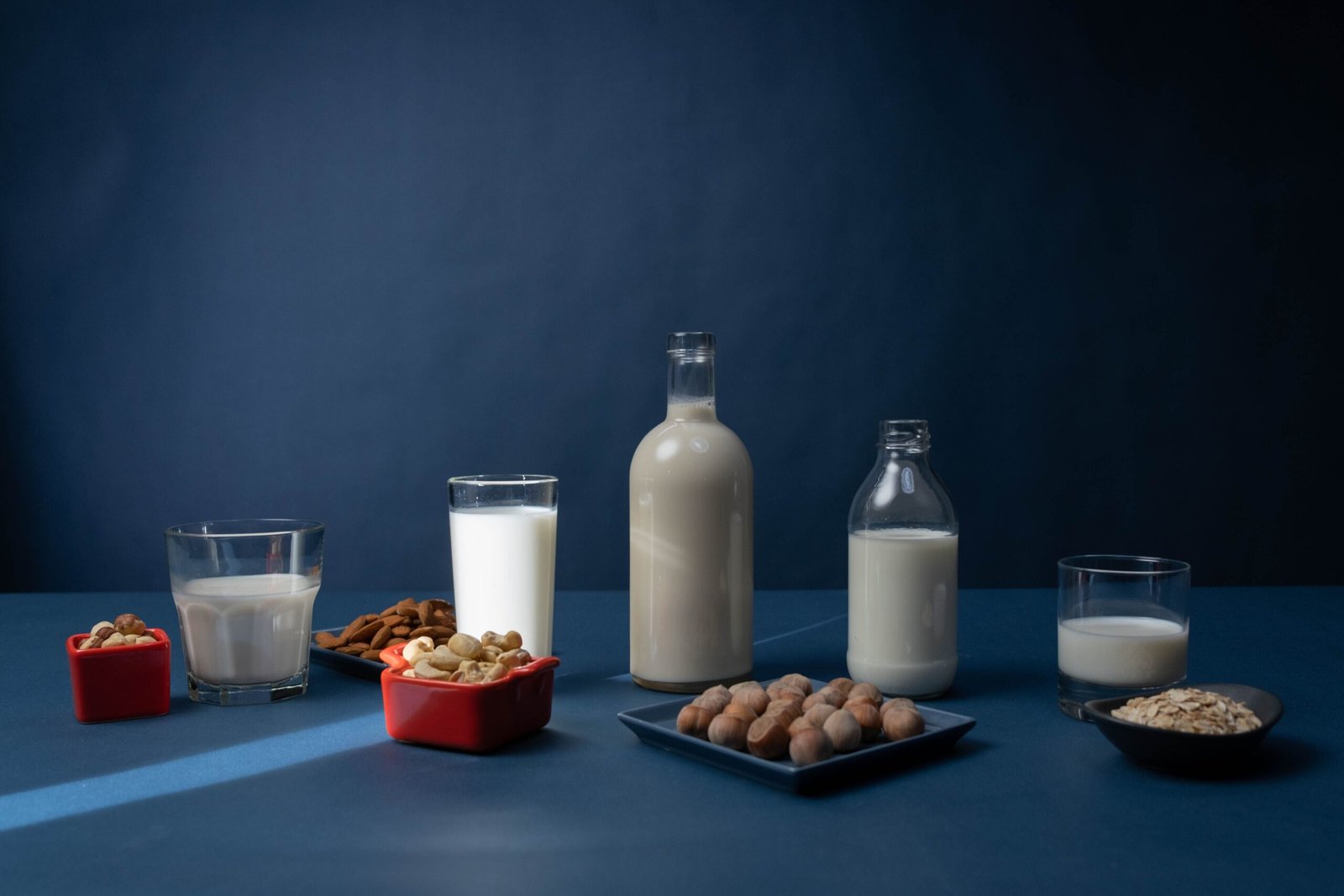
The refrigerated aisle now has more non-dairy milks than most people can sort through. Four dominate the shelf: soy, oat, almond, and pea. They look alike in a glass and are often marketed with similar wellness language, yet nutritionally they are quite different.
The short answer is that fortified, unsweetened soy and pea milks come closest to cow’s milk on protein. Oat milk is creamy and coffee-friendly but lower in protein and higher in carbohydrate. Almond milk is light and low in protein, so it works best as a beverage rather than a nutrition source. For all four, whether the carton is fortified and unsweetened matters more than which plant it comes from. This guide covers protein, vitamins and minerals, sugar, environmental impact, allergies, and how to match a milk to what you actually do with it.
The Quick Comparison
| Soy | Pea | Oat | Almond | |
|---|---|---|---|---|
| Protein per cup | about 7 to 9 g | about 6 to 10 g | about 1 to 4 g | about 1 g |
| Carbohydrate | Low | Low | Higher | Low |
| Closest to cow’s milk? | Yes, when fortified | Similar protein | Lower protein | Much lower protein |
| Best for | Everyday use, cooking, cereal | Protein, soy-free or nut-free households | Coffee, creamy texture | Smoothies, light drinking |
| Watch for | Soy allergy | Fortification varies by brand. | Added sugar, gluten cross-contact | Low protein, tree-nut allergy |
Those numbers are typical ranges. Brands differ, so always check the label.
Protein: The Biggest Gap
For many people, protein is the main reason to care. For reference, a cup of cow’s milk contains 8 grams of protein, and a cup of soy milk can provide about 9 grams of high-quality plant protein. Healthline
Soy is the clear plant milk leader. One cup of refrigerated unsweetened soy milk from a major brand has 80 calories, 4.5 grams of fat, 7 grams of protein, and 4 grams of carbohydrate. the daily meal
Pea milk matches it. Made from yellow split peas, pea milk is high in protein, at about 8 grams per cup. A review of pea milk brands found 6 to 10 grams of protein in 8 ounces, comparable to soy milk or cow’s milk, and more than almond, rice, or coconut milk. gulfnewsvrg
Oat milk sits in the middle to low end. One brand’s unsweetened oat milk has 45 calories, 0.5 grams of fat, 1 gram of protein, and 8 grams of carbohydrate per cup, while its regular version has 120 calories, 3 grams of protein, 7 grams of sugar, and 16 grams of carbohydrate. Oat milk is significantly higher in carbohydrate than other plant milks, including soy. the daily meal health line
Almond milk trails the field. On average it offers only about 1 gram of protein per serving, although it is naturally lower in calories than most. health
A large label analysis put the overall picture in perspective. Researchers examined 233 plant milks and reported that on average, plant milks contain about 2 grams of protein, and the best sources were soy and pea milks and blends at 6 to 10 grams per 8-ounce serving. If you drink milk partly for protein, soy and pea are the safe picks. If you mostly use it in coffee or on cereal and get protein elsewhere, the gap matters less. wral
Calcium, Vitamin D, and B12: Fortification Is Everything
Unfortified plant milks are essentially flavored water with a bit of plant material. Most of what makes them nutritionally useful is added during manufacturing. When many plant milks are processed, they are stripped of protein, calcium, and vitamin D, which is why a dietitian advises never choosing non-fortified products. ctv
The label analysis found that fortification is common but not universal. About half of the 233 products were fortified with vitamin D and two-thirds with calcium, and only 28 had as much or more protein, vitamin D, and calcium than cow’s milk. Among oat milks, 76 percent were fortified with both calcium and vitamin D, as were 69 percent of soy products and 66 percent of almond alternatives. wralwral
A few specifics worth knowing:
- B12 varies a lot. Soy milk can supply 100 to 120 percent of the daily value of B12, compared with 10 to 50 percent in oat milk. This matters if you are vegan, since plant foods do not naturally contain B12. the daily meal
- Not every pea milk is fully fortified. One reviewer noted that one major pea milk brand is fortified with calcium and vitamin D but does not supply B12, while others do. Fortification also differs by country, so a brand sold in one market may be formulated differently in another. vrg
- Oat and soy can look similar in calcium. Both fortified soy and oat milk from one brand provided 15 percent of the daily value of vitamin D and 20 percent of calcium. the daily meal
The takeaway is to read the nutrition panel. Look for calcium (roughly 300 milligrams per cup is the benchmark for dairy sets), vitamin D, and, if you are vegan, vitamin B12. Shaking the carton before pouring helps, since added minerals can settle.
Sugar and Additives
Sweetened and “original” versions often contain added sugar, which changes the nutrition picture significantly. UK expert committees reviewing plant milks flagged potential concerns related to higher intakes of free sugars and inadequate intakes of certain micronutrients across soya, oat, and almond drinks. Flavored oat milks and chocolate versions are the usual culprits. IBC
Look for “unsweetened” on the front and check the added sugars line. For coffee drinkers, note that barista editions are formulated differently. One barista oat milk lists 110 calories, 22 grams of carbohydrate, less than 1 gram of protein, 270 milligrams of calcium, and no vitamin D per cup. It froths well, but it is a very different product from a protein-rich soy or pea milk. The Boston Globe
Environmental Impact
All four plant milks beat dairy on environmental measures, though they differ among themselves. Data compiled by Our World in Data compare them per liter. Dairy milk generates about 3.15 kilograms of CO₂-equivalent per liter, compared with 0.9 for oat, 0.7 for almond, and 0.98 for soy. On land, a liter of dairy milk requires about 8.9 square meters per year, while oat, soy, almond, and rice milk each need less than one square meter. hubub sentient media
Water is where they diverge. Soy milk needs about 27.8 liters of water per liter, oat about 48, and almond about 371. Almond milk has low emissions but a heavy water footprint. As the Our World in Data analysis itself concluded, dairy milk has higher environmental impacts than all of the alternatives across the categories considered, and there is no clear winner among the dairy alternatives. The figures above do not cover pea milk, so I will not rank it. petatable debates
The practical read: switching from dairy to any of these reduces your footprint. If water use matters to you, soy and oat look better than almond.
Allergies and Sensitivities
- Soy is a common allergen, and some people avoid it by preference. A children’s nutrition expert speaking at the American Academy of Pediatrics conference noted that although soy’s phytoestrogens worry some parents, the current evidence shows soy is beneficial for children and adults. vegnews
- Almonds are a tree nut, so they are off the table for nut allergies.
- Pea milks were developed partly for people who are allergic or sensitive to soy or nuts. Peas are still a legume, so people with a pea allergy should skip them. vrg
- Oat is free of soy and nuts but not always gluten-free. Oats contain avenin, which can trigger a reaction in some people with celiac disease, and cross-contamination with wheat, barley, or rye can occur during processing. If you have celiac disease, buy products certified gluten-free. apollopharmacy
What About Kids?
Plant milks are not nutritionally equivalent to cow’s milk, and that matters most for young children who rely on milk for calories and protein. UK expert committees concluded that no almond, oat, or soya drink available in the UK is nutritionally equivalent to cows’ milk and that for children aged one to five, unfortified or sweetened plant-based drinks are not an acceptable alternative. They added that for vegan children in that age range, soya milk is preferable because it has more protein than almond or oat milks. A guidance summary tied to pediatric groups similarly states that fortified soy milk is the only plant milk recognized as nutritionally comparable among the options. The Vegetarian Resource Group notes that pea protein milk is nutritionally similar to soy milk, and that either should be fortified with calcium, vitamin B12, and vitamin D for a toddler. milk, oat, almond, latest health 5Hjd7PT 2 +4
None of these replace breast milk or infant formula in the first year. If your child has a milk allergy or follows a vegan diet, a pediatrician or dietitian can help you choose.
Choosing by Use
- Cereal, smoothies, and cooking: soy or pea for the protein and neutral taste.
- Coffee and tea: oat for creaminess, with the trade-off in protein. Some soy milks also froth well.
- Lowest-calorie option: unsweetened almond, as long as the rest of your diet covers protein and calcium.
- Soy-free and nut-free: pea milk.
- Replacing dairy as a main drink for an adult: fortified, unsweetened soy or pea.
- Children: fortified soy, with professional guidance.
The Bottom Line
No plant milk is a perfect replica of cow’s milk, but a good one can fill most of the same nutritional roles. Soy and pea come closest on protein. Oatmeal wins on texture and coffee performance but carries more carbohydrates and less protein. Almond is light and low in protein, with a heavy water footprint. Across all four, the carton in your hand matters more than the plant it came from: choose fortified, unsweetened versions, check the label for calcium, vitamin D, and B12, and match the milk to how you use it.